Auro e-Books library: free ebooks on yoga, spirituality and Indian philosophy — works by Sri Aurobindo, the Mother and their disciples in PDF, ePub, Kindle.
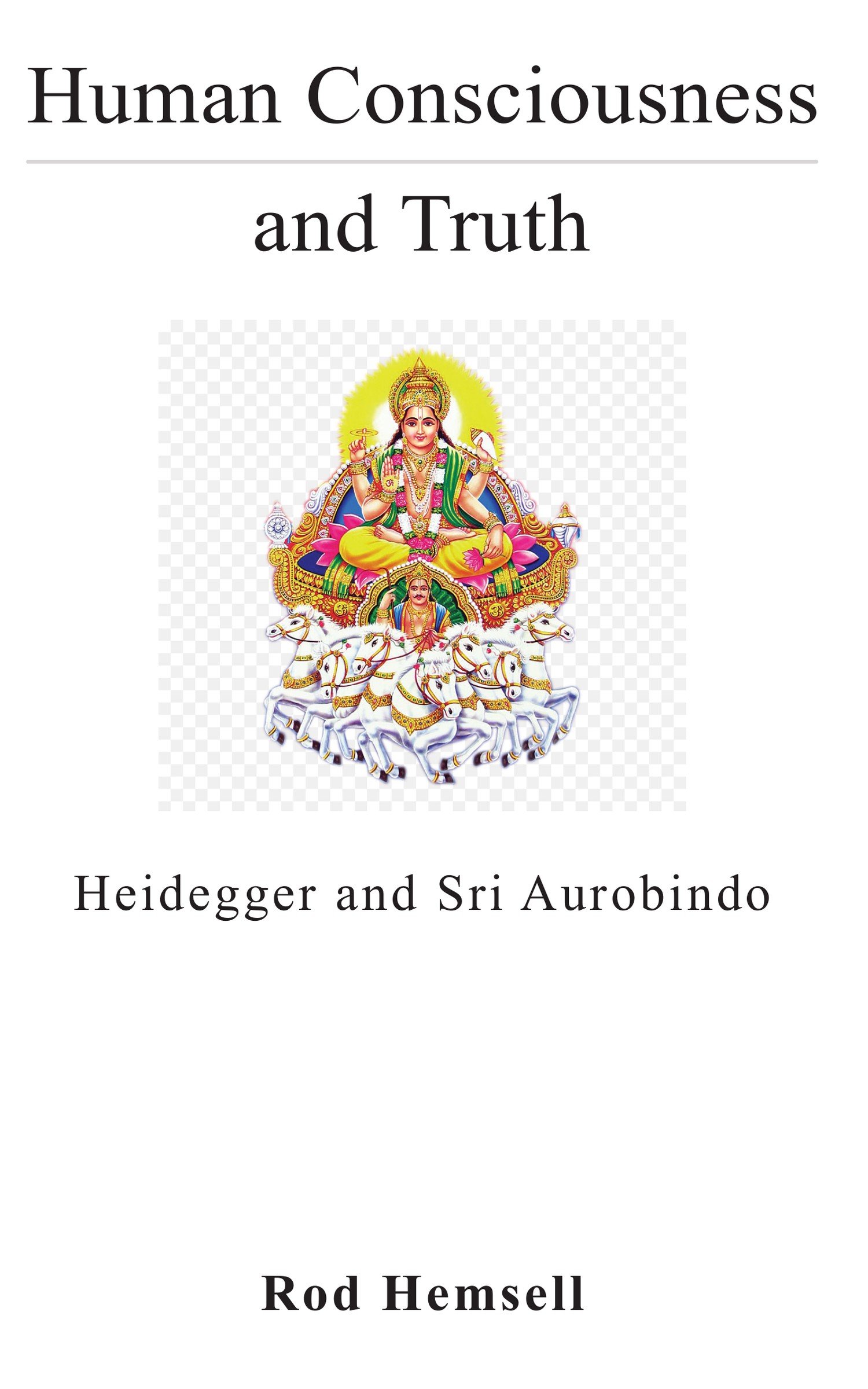
Human Consciousness and Truth is a book of contemplations, reflections and meditations on some of the works of Martin Heidegger and Sri Aurobindo. Its author writes from many decades of dedicated study, and his aim is to create an awareness of the depths and heights of knowledge that these two thinkers explored and recorded in their writings — regions that, as he says, are reached only by the most persistent and devoted students of such authors and seers.
The book follows the movement of Heidegger’s later thought — from the end of Western metaphysics to technology, poetry and time — and reads it alongside Sri Aurobindo’s own metaphysics of consciousness. Three supplements open the subject further, and the last chapter is an introduction to yoga philosophy.
https://auro-ebooks.com/wp-content/uploads/2026/10/Human-Consciousness-and-Truth-cover.jpg24001500http://auro-ebooks.com/wp-content/uploads/2023/06/auro-ebooks-logo.png2026-10-27 11:34:292026-11-01 15:31:28Human Consciousness and Truth: Heidegger and Sri Aurobindo
The second volume of M.P. Pandit‘s Talks on the Life Divine continues the commentary on Sri Aurobindo‘s great work, taking up the later chapters — the cosmic consciousness, Brahman-Purusha-Ishwara, the eternal and the individual, the higher planes of mind, the ascent of consciousness, and the eventual possibility of the divine life on earth. As in the first volume, the treatment is at once faithful to Sri Aurobindo’s text and alive to the questions of the practising sadhak. Together the two volumes form the most complete and accessible commentary on The Life Divine available.
1. The Cosmic Indeterminate
2. Brahman — Purusha — Ishwara (I)
3. Brahman — Purusha — Ishwara (II)
4. Brahman — Purusha — Ishwara (III)
5. The Eternal and the Individual
6. The Divine and the Undivine (I)
7. The Divine and the Undivine (II)
8. The Divine and the Undivine (III)
9. The Cosmic Illusion (I)
10. The Cosmic Illusion (II)
11. The Cosmic Illusion (III)
12. Reality and the Cosmic Illusion (I)
13. Reality and the Cosmic Illusion (II)
14. Reality and the Cosmic Illusion (III)
15. The Knowledge and the Ignorance
16. Memory, Self-Consciousness and the Ignorance
17. Memory, Ego, Self-Experience
18. Knowledge by Identity and Separative Knowledge (I)
19. Knowledge by Identity and Separative Knowledge (II)
20. Knowledge by Identity and Separative Knowledge (III)
21. Knowledge by Identity and Separative Knowledge (IV)
22. Knowledge by Identity and Separative Knowledge (V)
https://auro-ebooks.com/wp-content/uploads/2026/08/talks-on-the-life-divine-vol-2.jpg500328http://auro-ebooks.com/wp-content/uploads/2023/06/auro-ebooks-logo.png2026-08-30 16:35:522026-08-30 16:35:52Talks on the Life Divine, Vol. 2
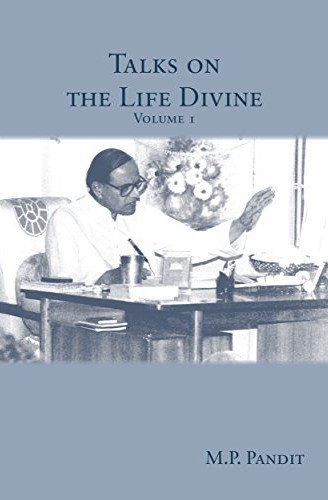
M.P. Pandit‘s Talks on the Life Divine is a chapter-by-chapter commentary on Sri Aurobindo‘s magnum opus, given to small groups of students in the Sri Aurobindo Ashram. This first volume covers the opening chapters of The Life Divine — from the human aspiration and the materialist denial through the nature of reality, consciousness-force, the supermind, life, mind, matter and the ascent to the supermind. Pandit’s gift is his ability to make the great metaphysical argument concrete, personal and practical; the talks read as a living study-circle in which the deepest questions of existence are brought into the light of experience.
1. The Human Aspiration
2. The Materialist Denial
3. The Refusal of the Ascetic
4. Reality Omnipresent
5. The Destiny of the Individual
6. Man in the Universe
7. The Ego and the Dualities
8. The Methods of Vedantic Knowledge
9. The Pure Existent
10. Consciousness Force
11. The Delight of Existence: The Problem
12. The Delight of Existence: The Solution
13. The Divine Maya
14. The Supermind as Creator
15. The Supreme Truth-Consciousness
16. The Triple Status of Supermind
17. The Divine Soul
18. Mind and Supermind
19. Life
20. Death, Desire and Incapacity
21. The Ascent of Life
22. The Problem of Life
23. The Double Soul in Man
24. The Double Soul in Man (continued)
25. Matter
26. The Knot of Matter
27. Ascending Series of Substance
28. The Sevenfold chord of Being
29. Supermind, Mind and the Overmind Maya
30. Supermind, Mind and the Overmind Maya (Continued)
https://auro-ebooks.com/wp-content/uploads/2026/08/talks-on-the-life-divine-vol-1.jpg500328http://auro-ebooks.com/wp-content/uploads/2023/06/auro-ebooks-logo.png2026-08-30 16:35:492026-08-30 16:35:49Talks on the Life Divine, Vol. 1
M.P. Pandit‘s Introducing Savitri is the ideal gateway to Sri Aurobindo‘s epic poem. In five chapters Pandit takes the reader through the story and vision of the poem — Savitri old and new, the quest of Aswapathy, the birth and growth of Savitri, Savitri and the new age, and the encounter with the God of Death — revealing the symbolic depth and spiritual power of Sri Aurobindo’s masterpiece. An addendum, “Savitri: Veda of the New Age”, places the poem in the line of the ancient Vedic revelation. For readers approaching Savitri for the first time, or returning to it, this book is an indispensable companion.
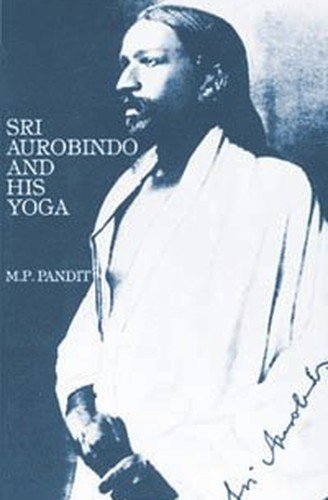
M.P. Pandit‘s Sri Aurobindo and His Yoga is a comprehensive introduction to the life, philosophy and practice of Sri Aurobindo‘s integral yoga. The first part surveys Sri Aurobindo’s life and work — his philosophy, his yoga, his writings on the Veda, the Upanishads, the Gita and the Tantra, and his vision of Indian culture and social development. The second part turns to the practice of the yoga itself: the foundations of sadhana, the role of the Mother, the stages of the inner development, and the conditions of transformation. Written by one of Sri Aurobindo’s closest disciples, this is a classic introduction to the integral yoga.
https://auro-ebooks.com/wp-content/uploads/2026/08/sri-aurobindo-and-his-yoga.jpg500328http://auro-ebooks.com/wp-content/uploads/2023/06/auro-ebooks-logo.png2026-08-30 16:35:432026-08-30 16:35:43Sri Aurobindo and His Yoga
M.P. Pandit‘s Thoughts on the Gita is a series of studies of the Bhagavad Gita in the light of Sri Aurobindo‘s integral vision. Taking up the Gita’s great themes — the Divine Teacher and the human disciple, works and sacrifice, equality, the two natures, avatarhood, the vision of the universal form, and the way to the supreme secret — Pandit unfolds the Gita as a living guide to the spiritual life rather than a text of dry philosophy. His approach follows Sri Aurobindo’s own teaching: the Gita is not a book of abstract metaphysics but the record of a decisive spiritual battle, and its message is addressed to every seeker who must act in the world.
https://auro-ebooks.com/wp-content/uploads/2026/08/thoughts-on-the-gita.jpg500328http://auro-ebooks.com/wp-content/uploads/2023/06/auro-ebooks-logo.png2026-08-30 16:35:402026-08-30 16:35:40Thoughts on the Gita
M.P. Pandit‘s The Heart of Sadhana contains his talks on Sri Aurobindo‘s book The Mother — the classic text in which Sri Aurobindo described the Divine Mother and her Four Powers. In seventeen short chapters Pandit takes up the central themes of the spiritual life: aspiration and grace, the conditions of the sadhana, personal effort, the conquest of desire, universalisation, and the four great powers of the Mother — Maheshwari, Mahakali, Mahalakshmi and Mahasaraswati. Written with the clarity of a lifelong practitioner, this is an ideal companion to the study of The Mother, guiding the reader from the first stirrings of aspiration to the conditions of complete transformation.
The book “Beyond Man” by Georges van Vrekhem is based on documents which have never been presented before as a whole by other authors. It gives a surprising look behind the scenes of the history of this century. It presents a positive evaluation of the crisis our Earth is subject to at this very moment and it opens a vertiginous but hopeful perspective on the coming of a superhuman species and a divine life upon Earth.
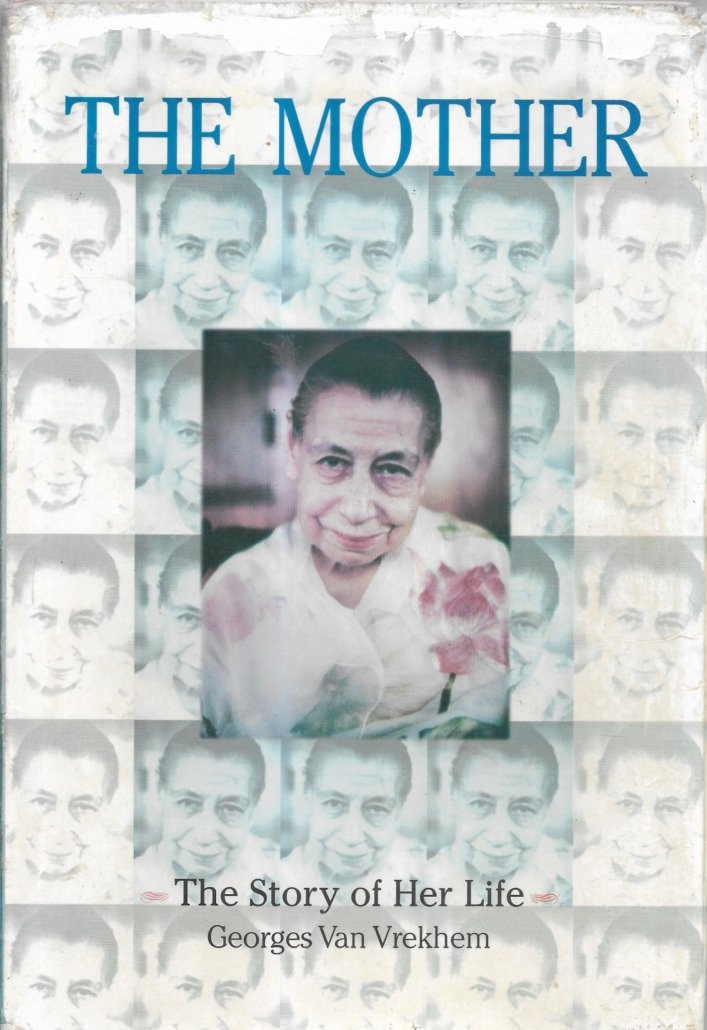
The Mother The Story of Her Life is a biography of the Mother (Mirra Alfassa) by Georges Van Vrekhem. Despite their essential contribution to the present world, Sri Aurobindo and the Mother are still mostly unknown outside the circles of their disciples and devotees. It is Georges Van Vrekhem’s intention in this biography of the Mother to examine all available material about her life and to present it in an accessible and interesting way. He attempts to draw the full picture, including the often neglected but important last years of her life, and even of some reincarnations explicitly confirmed by the Mother herself.
https://auro-ebooks.com/wp-content/uploads/2026/08/The-Mother-cover250sq.png250250Auro e-Bookshttp://auro-ebooks.com/wp-content/uploads/2023/06/auro-ebooks-logo.pngAuro e-Books2026-08-27 15:49:002026-09-03 15:14:39The Mother The Story of Her Life
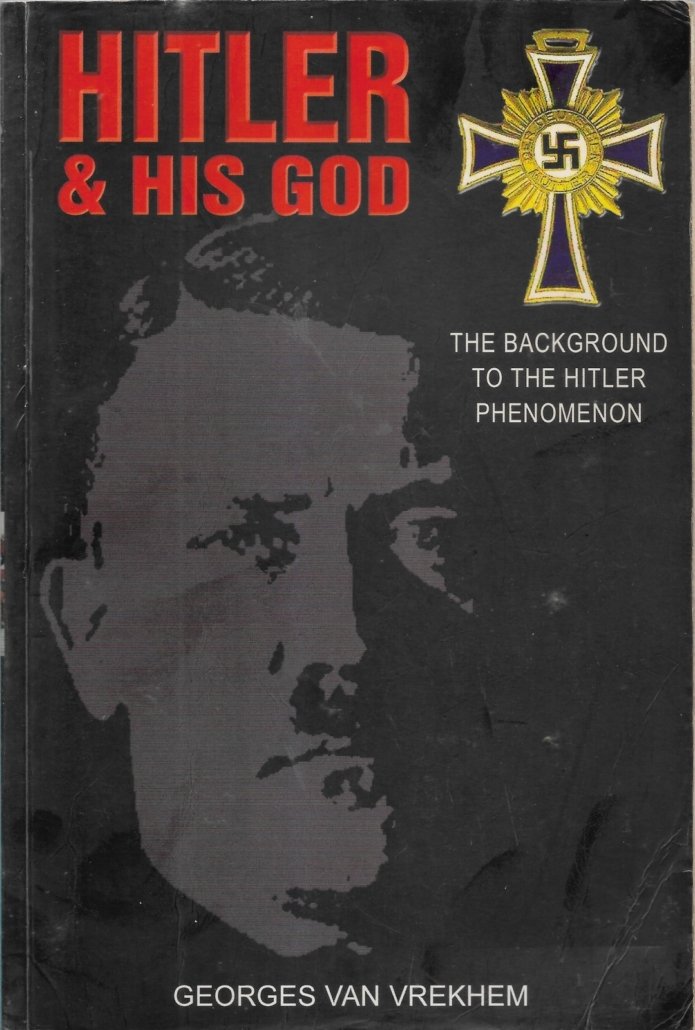
Hitler remains an enigma in spite of everything that has been written about him. Historians like Alan Bullock, Ian Kershaw and H.R. Trevor-Roper confess their perplexity openly. How was it possible that an unknown, solitary and future-less front-soldier in 1918 became, some years later, the Leader and Messiah of the German people? How could a nullity unleash the most destructive and deadliest war humanity has ever known? Academic historians give countless reasons because the essential reason keeps escaping them; fantasy writers find the most bizarre occult explanations, disregarding the historical facts.
Georges Van Vrekhem has studied the literature in German, English, French, Dutch and Italian for several years. His conclusion is clear: in Hitler there must have been a cause equivalent to the effects of his actions. Van Vrekhem gives a revealing picture of the rise of the unknown Austrian corporal and brings to life the people who helped him in the saddle: Dietrich Eckart, Captain Mayr, General von Mohl, and many others. The author analyses Mein Kampf, the book in which Hitler laid bare his thoughts and intentions without being believed. And he shows how this “man from nowhere”, driven by the obsession of his mission and helped by incredible luck, managed to become the Führer.
To explain the foundations of a people who made Hitler possible, Van Vrekhem undertakes, in the book’s second part, a deep-probing analysis of the historical background. In this he gives a surprisingly clear picture of the German ambition, the racism which supported it, and the romantic youth movements which incorporated the racism. In a memorable chapter he sketches the history of the German Jews. And he shows another side of the German people: their longing for a better world, although vitiated by their sense of superiority.
All this brings Georges Van Vrekhem to his central theme: Hitler’s possession by the “god” who inspired him, guided him, brought him to power – and dropped him when no longer needed. This leads the author, in the third part of the book, to the unexpected but well-documented role of the Indian philosopher and sage Sri Aurobindo in the action against Hitler before and during the Second World War. While Hitler wanted to bring humanity back to a state of barbarism, Sri Aurobindo stood for the progress of humanity and a future in which a new evolutionary being, beyond humanity, might at last create the world humanity has never ceased to long for. In this view of history, many worlds interact and all facts fit into the big picture.
https://auro-ebooks.com/wp-content/uploads/2026/08/Hitler-and-his-God-cover250sq.png250250Auro e-Bookshttp://auro-ebooks.com/wp-content/uploads/2023/06/auro-ebooks-logo.pngAuro e-Books2026-08-27 15:48:002026-09-03 15:14:39Hitler and his God