
Early Cultural Writings
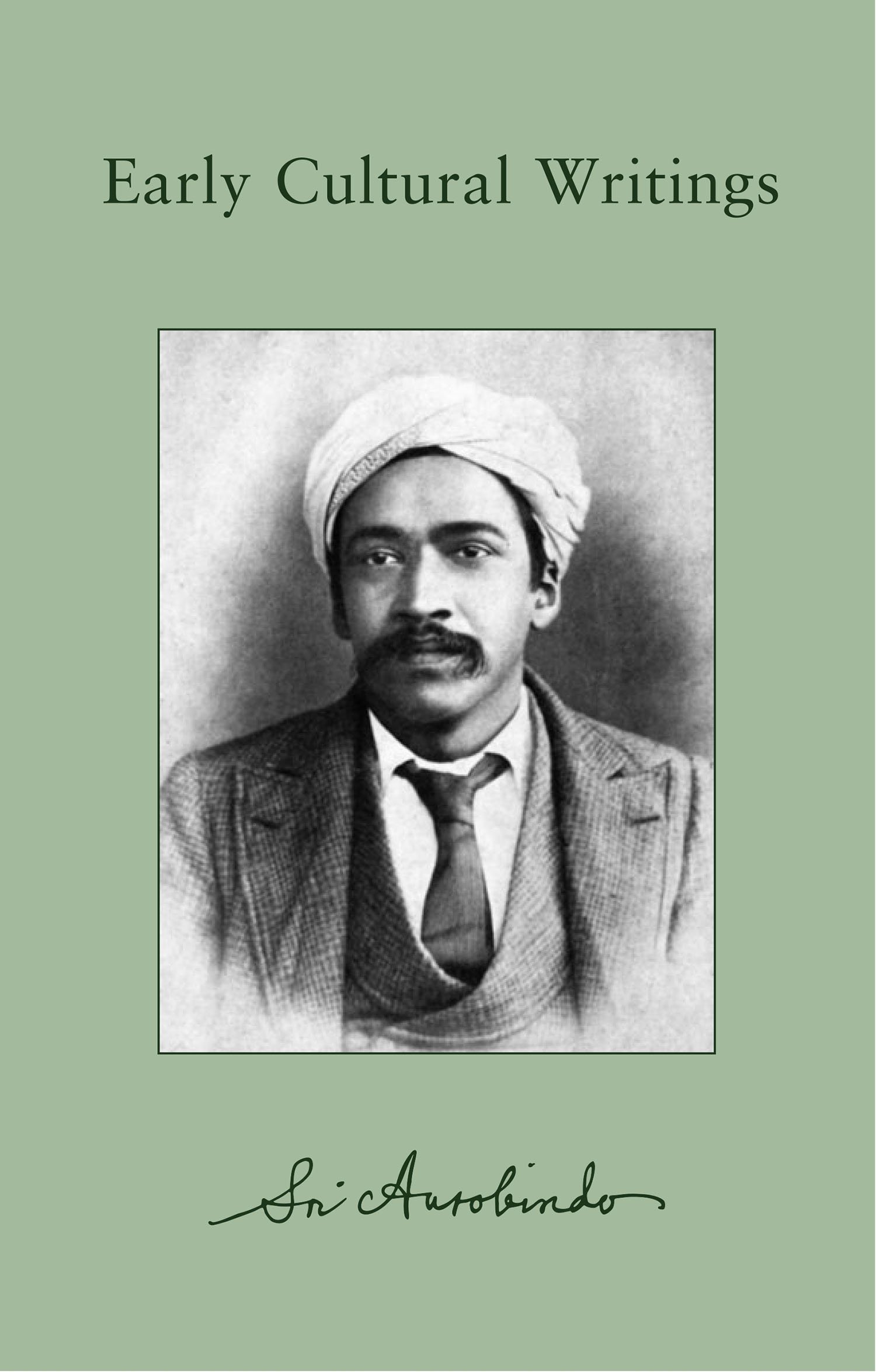
Early Cultural Writings
Early Cultural Writings is a comprehensive collection of Sri Aurobindo’s early prose works, focusing on literature, art, education, and cultural criticism. This volume brings together seminal essays and writings composed primarily between 1890 and 1910, with additional pieces from 1910-1920.
Key Contents & Featured Essays Include:
- The Harmony of Virtue
- Critical studies on Bankim Chandra Chatterji, Kalidasa, and the Mahabharata
- The National Value of Art
- Baroda Speeches and Reports
- Bankim – Tilak – Dayananda
- Essays from the “Chandernagore Manuscript”
- Epistles from Abroad, book reviews, and Conversations of the Dead
About This Edition: The editors have organized the material thematically into nine parts with two appendices. The texts have been meticulously verified against original manuscripts and lifetime publications. Editorial notations and a detailed Note on the Texts clarify revisions and manuscript sources. (Much of this material was previously published under the title The Harmony of Virtue).
Book Details
Author: Sri Aurobindo
Print Length: 808 pages
Publisher: Sri Aurobindo Ashram
Contributor: Krishna
Language: English
Book Download
Contents
Part One. The Harmony of Virtue
- The Sole Motive of Man’s Existence
- The Harmony of Virtue
- Beauty in the Real
- Stray Thoughts
Part Two. On Literature
- Bankim Chandra Chatterji
- On Poetry and Literature
- The Poetry of Kalidasa
- On the Mahabharata
Part Three. On Education
- Address at the Baroda College Social Gathering
- Education
- The Brain of India
- A System of National Education
- Message for National Education Week (1918)
- National Education
- A Preface on National Education
Part Four. On Art
- The National Value of Art
- Two Pictures
- Indian Art and an Old Classic
- The Revival of Indian Art
- An Answer to a Critic
Part Five. Conversations of the Dead
- Dinshah, Perizade
- Turiu, Uriu
- Mazzini, Cavour, Garibaldi
- Shivaji, Jaysingh
- Littleton, Percival
Part Six. The Chandernagore Manuscript
- Passing Thoughts [1]
- Passing Thoughts [2]
- Passing Thoughts [3]
- Hathayoga
- Rajayoga
- Historical Impressions: The French Revolution
- Historical Impressions: Napoleon
- In the Society’s Chambers
- At the Society’s Chambers
- Things Seen in Symbols [1]
- Things Seen in Symbols [2]
- The Real Difficulty
- Art
Part Seven. Epistles / Letters From Abroad
- Epistles from Abroad
- Letters from Abroad
Part Eight. Reviews
- “Suprabhat”
- “Hymns to the Goddess”
- “South Indian Bronzes”
- “God, the Invisible King”
- “Rupam”
- About Astrology
- “Sanskrit Research”
- “The Feast of Youth”
- “Shama’a”
Part Nine. Bankim – Tilak – Dayananda
- Rishi Bankim Chandra
- Bal Gangadhar Tilak
- A Great Mind, a Great Will
- Dayananda: The Man and His Work
- Dayananda and the Veda
- The Men that Pass
Appendix One. Baroda Speeches and Reports
- Speeches Written for the Maharaja of Baroda
- Report on Trade in the Baroda State
- Opinions Written as Acting Principal, Baroda College
Appendix Two. Premises of Astrology
- Note on the Texts
Sample
Early Cultural Writings
Notes on the Mahabharata
of Krishna Dwypaiana Vyasa.
prepared with a view to disengage the original epic of Krishna of the island from the enlargements, accretions and additions made by Vyshampaian, Ugrosravas & innumerable other writers.
by Aurobind Ghose
Proposita.
An epic of the Bharatas was written by Krishna of the Island called Vyasa, in 24,000 couplets or something more, less at any rate than 27,000, on the subject of the great civil war of the Bharatas and the establishment of the Dhurmarajya or universal sovereignty in that house.
This epic can be disengaged almost in its entirety from the present poem of nearly 100,000 slokas.
It was hinted in a recent article of the Indian Review, an unusually able and searching paper on the date of the Mahabharata war that a society is about to be formed for discovering the genuine and original portions of our great epic. This is glad tidings to all admirers of Sanscrit literature and to all lovers of their country. For the solution of the Mahabharata problem is essential to many things, to any history worth having of Aryan civilisation & literature, to a proper appreciation of Vyasa’s poetical genius and, far more important than either, to a definite understanding of the great ethical gospel which Srikrishna came down on earth to teach as a guide to mankind in the dark Kali yuga then approaching. But I fear that if the inquiry is to be pursued on the lines the writer of this article seemed to hint, if the Society is to rake out 8000 lines from the War Purvas & dub the result the Mahabharata of Vyasa, then the last state of the problem will be worse than its first. It is only by a patient scrutiny & weighing of the whole poem, disinterestedly, candidly & without preconceived notions, a consideration Canto by Canto, paragraph by paragraph, couplet by couplet that we can arrive at anything solid or permanent. But this implies a vast and heartbreaking labour. Certainly, labour however vast ought not to have any terrors for a scholar, still less for a Hindu scholar; yet before one engages in it, one requires to be assured that the game is worth the candle. For that assurance there are three necessary requisites, the possession of certain, sound and always applicable tests to detect later from earlier work, a reasonable chance that such tests if applied will restore the real epic roughly if not exactly in its original form and an assurance that the epic when recovered will repay from literary, historical or other points of view, the labour that has been bestowed on it. I believe that these three requisites are present in this case and shall attempt to adduce a few reasons for my judgment. I shall try to show that besides other internal evidence on which I do not propose just now to enter, there are certain traits of poetical style, personality and thought which belong to the original work and are possessed by no other writer. I shall also try to show that these traits may be used and by whom they may be used as a safe guide through this huge morass of verse. In passing I shall have occasion to make clear certain claims the epic thus disengaged will possess to the highest literary, historical and practical value.
It is certainly not creditable to European scholarship that after so many decades of Sanscrit research, the problem of the Mahabharata which should really be the pivot for all the rest, has remained practically untouched. For it is not exaggeration to say that European scholarship has shed no light whatever on the Mahabharata beyond the bare fact that it is the work of more than one hand. All else it has advanced, and fortunately it has advanced little, has been rash, arbitrary or prejudiced; theories, theories, always theories without any honestly industrious consideration of the problem. The earliest method adopted was to argue from European analogies, a method pregnant of error & delusion. If we consider the hypothesis of a rude ballad-epic doctored by “those Brahmins” — anyone who is curious on the matter may study with both profit & amusement Frazer’s History of Indian Literature — we shall perceive how this method has been worked. A fancy was started in Germany that the Iliad of Homer is really a pastiche or clever rifacimento of old ballads put together in the time of Pisistratus. This truly barbarous imagination with its rude ignorance of the psychological bases of all great poetry has now fallen into some discredit; it has been replaced by a more plausible attempt to discover a nucleus in the poem, an Achilleid, out of which the larger Iliad has grown. Very possibly the whole discussion will finally end in the restoration of a single Homer with a single poem, subjected indeed to some inevitable interpolation and corruption, but mainly the work of one mind, a theory still held by more than one considerable scholar. In the meanwhile, however, haste has been made to apply the analogy to the Mahabharata; lynx-eyed theorists have discovered in the poem — apparently without taking the trouble to study it — an early and rude ballad epic worked up, doctored and defaced by those wicked Brahmins, who are made responsible for all the literary and other enormities which have been discovered by the bushelful, and not by European lynxes alone — in our literature and civilisation. Now whether the theory is true or not, and one sees nothing in its favour, it has at present no value at all; for it is a pure theory without any justifying facts. It is not difficult to build these intellectual cardhouses; anyone may raise them by the dozen who can find no better manner of wasting valuable time. A similar method of “arguing from Homer” is probably at the bottom of Professor Weber’s assertion that the War Purvas contain the original epic. An observant eye at once perceives that the War Purvas are far more hopelessly tangled than any that precede them except the first. It is here & here only that the keenest eye becomes confused & the most confident explorer begins to lose heart & self-reliance. But the Iliad is all battles and it therefore follows in the European mind that the original Mahabharata must have been all battles. Another method is that of ingenious, if forced argument from stray slokas of the poem or equally stray & obscure remarks in Buddhist compilations. The curious theory of some scholars that the Pandavas were a later invention and that the original war was between the Kurus and Panchalas only and Professor Weber’s singularly positive inference from a sloka which does not at first sight bear the meaning he puts on it, that the original epic contained only 8800 lines, are ingenuities of this type. They are based on the Teutonic art of building a whole mammoth out of a single and often problematical bone, and remind one strongly of Mr. Pickwick and the historic inscription which was so rudely, if in a Pickwickian sense, challenged by the refractory [Mr. Blotton.] All these theorisings are idle enough; they are made of too airy a stuff to last. ‘Only a serious scrutiny of the Mahabharata made with a deep sense of critical responsibility and according to the methods of patient scientific inference, can justify one in advancing any considerable theory on this wonderful poetic structure.’
Yet to extricate the original epic from the mass of accretions is not, I believe, so difficult a task as it may at first appear. One is struck in perusing the Mahabharata by the presence of a mass of poetry which bears the style and impress of a single, strong and original, even unusual mind, differing in his manner of expression, tone of thought & stamp of personality not only from every other Sanscrit poet we know but from every other great poet known to literature. When we look more closely into the distribution of this peculiar style of writing, we come to perceive certain very suggestive & helpful facts. We realise that this impress is only found in those parts of the poem which are necessary to the due conduct of the story, seldom to be detected in the more miraculous, Puranistic or trivial episodes, but usually broken up by passages and sometimes shot through with lines of a discernibly different inspiration. Equally noteworthy is it that nowhere does this poet admit any trait, incident or speech which deviates from the strict propriety of dramatic characterisation & psychological probability. Finally Krishna’s divinity is recognized, but more often hinted at than aggressively stated. The tendency is to keep it in the background as a fact to which, while himself crediting it, the writer does not hope for universal consent, still less is able to speak of it as of a general tenet & matter of dogmatic belief; he prefers to show Krishna rather in his human character, acting always by wise, discerning and inspired methods, but still not transgressing the limit of human possibility. All this leads one to the conclusion that in the body of poetry I have described, we have the real Bharata, an epic which tells plainly and straightforwardly of the events which led to the great war and the empire of the Bharata princes. Certainly if Prof. Weber’s venturesome assertion as to the length of the original Mahabharata be correct, this conclusion falls to the ground; for the mass of this poetry amounts to considerably over 20,000 slokas. Professor Weber’s inference, however, is worth some discussion; for the length of the original epic is a very important element in the problem. If we accept it, we must say farewell to all hopes of unravelling the tangle. His assertion is founded on a single & obscure verse in the huge prolegomena to the poem which take up the greater part of the Adi Purva, no very strong basis for so far-reaching an assumption. The sloka itself says no more than this that much of the Mahabharata was written in so difficult a style that Vyasa himself could remember only 8800 of the slokas, Suka an equal amount and Sanjaya perhaps as much, perhaps something less. There is certainly here no assertion such as Prof. Weber would have us find in it that the Mahabharata at any time amounted to no more than 8800 slokas. Even if we assume what the text does not say that Vyasa, Suka & Sanjaya knew the same 8800 slokas, we do not get to that conclusion. The point simply is that the style of the Mahabharat was too difficult for a single man to keep in memory more than a certain portion of it. This does not carry us very far. If however we are to assume that there is more in this verse than meets the eye, that it is a cryptic way of stating the length of the original poem; and I do not deny that this is possible, perhaps even probable — we should note the repetition of वेत्ति – अहं वेद्मि शुको वेत्ति सञ्जयो वेत्ति वा न वा. Following thegenius of the Sanscrit language we are led to suppose the repetition was intended to recall अष्टौ श्लोकसहस्राणि etc. with each name; otherwise the repetition has no raison d’être; it is otiose & inept. But if we understand it thus, the conclusion is irresistible that each knew a different 8800, or the writer would have no object in wishing us to repeat the number three times in our mind. The length of the epic as derived from this single sloka should then be 26,400 slokas or something less, for the writer hesitates about the exact number to be attributed to Sanjaya. Another passage further on in the prolegomena agrees remarkably with this conclusion and is in itself much more explicit. It is there stated plainly enough that Vyasa first wrote the Mahabharata in 24,000 slokas and afterwards enlarged it to 100,000 for the world of men as well as a still more unconscionable number of verses for the Gandhurva and other worlds. In spite of the embroidery of fancy, of a type familiar enough to all who are acquainted with the Puranic method of recording facts, the meaning of this is unmistakeable. The original Mahabharata consisted of 24,000 slokas, but in its final form it runs to 100,000. The figures are probably loose & slovenly, for at any rate the final form of the Mahabharata is considerably under 100,000 slokas. It is possible therefore that the original epic was something over 24,000 and under 26,400 slokas, in which case the two passages would agree well enough. But it would be unsafe to found any dogmatic assertion on isolated couplets; at the most we can say that we are justified in taking the estimate as a probable and workable hypothesis and if it is found to be corroborated by other facts, we may venture to suggest its correctness as a moral certainty.
…
Related
The song of Vande Mataram comes from the novel Anandamath by Bankim Chandra Chatterjee — read it free online (PDF, ePub).