Free ebooks on yoga, spirituality and Integral Yoga: the complete works of Sri Aurobindo and the Mother in PDF, ePub and Kindle. No registration needed.
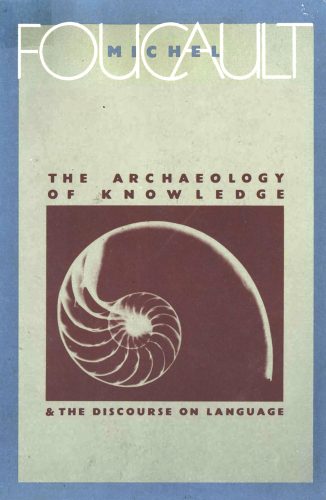
Madness, sexuality, power, knowledge — are these facts of life or simply parts of speech? In a series of works of astonishing brilliance, historian Michel Foucault has excavated the hidden assumptions that govern the way we live and the way we think. The Archaeology of Knowledge begins at the of “things said” and moves quickly to illuminate the connections between knowledge, language, and action in a style at once profound and personal. A summing up of Foucault’s own methodological assumptions, this book is also a first step toward a genealogy of the way we live now. Challenging, at times infuriating, it is an absolutely indispensable guide to one of the most innovative thinkers now writing.
Book Details
Author: Michel Foucault
Print Length: 240
Publisher: Pantheon Books
Submitted by: Robert
Book format: Pdf
Language: English Read more
https://auro-ebooks.com/wp-content/uploads/2020/06/Michel-Foucault-Archaeology-of-Knowledge_sq250.png250250Auro e-Bookshttp://auro-ebooks.com/wp-content/uploads/2023/06/auro-ebooks-logo.pngAuro e-Books2020-06-21 02:04:142020-06-21 02:08:24The Archaeology of Knowledge and The Discourse on Language by Michel Foucault
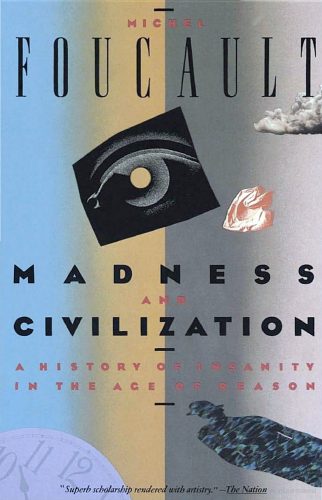
Michel Foucault examines the archeology of madness in the West from 1500 to 1800 – from the late Middle Ages, when insanity was still considered part of everyday life and fools and lunatics walked the streets freely, to the time when such people began to be considered a threat, asylums were first built, and walls were erected between the “insane” and the rest of humanity.
Foucault traces the evolution of the concept of madness through three phases: the Renaissance, the “Classical Age” (the later seventeenth and most of the eighteenth centuries) and the modern experience. He argues that in the Renaissance the mad were portrayed in art as possessing a kind of wisdom – a knowledge of the limits of our world – and portrayed in literature as revealing the distinction between what men are and what they pretend to be. Renaissance art and literature depicted the mad as engaged with the reasonable while representing the mysterious forces of cosmic tragedy but the Renaissance also marked the beginning of an objective description of reason and unreason (as though seen from above) compared with the more intimate medieval descriptions from within society.
Book Details
Author: Michel Foucault
Print Length: 311
Publisher: Random House
Submitted by: Robert
Book format: Pdf
Language: English Read more
https://auro-ebooks.com/wp-content/uploads/2020/06/Michel-Foucault-A-History-of-Insanity-in-the-Age-of-Reason_sq250.png250250Auro e-Bookshttp://auro-ebooks.com/wp-content/uploads/2023/06/auro-ebooks-logo.pngAuro e-Books2020-06-21 01:45:002020-06-21 01:47:15Madness and Civilization: A History of Insanity in the Age of Reason by Michel Foucault
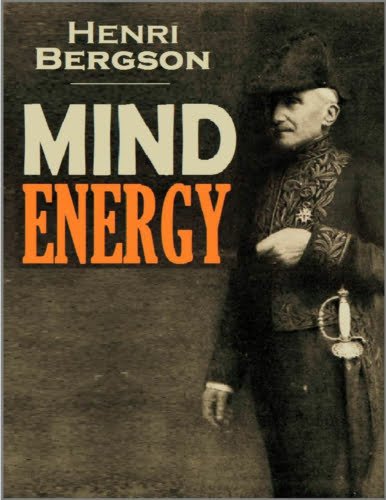
In these essays, Bergson writes, concerning the idea of parallelism between mind and body:
“Consciousness tells no more than what is going on in the brain, it only tells it in a different language.” There can be no doubt that the origin of this thesis is entirely metaphysical. It comes to us in a direct line from the Cartesian philosophy of the seventeenth century. …I believe that the facts, examined without prejudice and without the bias towards a mathematical mechanism, suggest a more subtle hypothesis concerning the correspondence between the psychic (ie., mental) and the cerebral state. The latter only express the action which is prefigured in the former. …for to the same cerebral state there may equally well correspond many different psychic facts” (p. 144).
In his characteristically clear and precise manner Bergson pursues in these essays the elusive problem of the mind-body relationship which is once again at the forefront of both the science and the philosophy of consciousness today. The solution that he suggests is that these are two different approaches to the understanding of reality, each describing an aspect of that reality – one material and the other spiritual. Science tries to grasp the reality by means of physical observation and measurement; the philosophical approach tries to grasp reality by means of intuition and ideation. To fail to make the distinction necessarily leads to contradiction and error.
Bergson published these essays in 1919, more than 20 years after Matter and Memory (1896) and Creative Evolution (1907), at a time when his reputation as the leading philosopher of the day had spread throughout both the physical and the spiritual world. He was president of the Academie des science (France) and the Society for Psychical Research (UK), representing the two approaches to knowledge. And he had lectured at Oxford (UK) and Columbia (USA) universities. He was fluent in English and had decided as a young university student to become a citizen of France rather than of England.
The fact that Bergson’s work is currently enjoying a revival in both science and philosophy, due to the widespread interest in the study of “consciousness”, along with the concurrence and convergence of his philosophy with that of Sri Aurobindo, suggests that these essays may be important to the understanding of both of these philosophers of Intuition and Consciousness, as well as to better understanding the relevance of their thought in the world today.
https://auro-ebooks.com/wp-content/uploads/2020/06/Henri-Bergson-Mind-Energy_001_sq350.png350350Auro e-Bookshttp://auro-ebooks.com/wp-content/uploads/2023/06/auro-ebooks-logo.pngAuro e-Books2020-06-06 03:21:432026-08-26 03:53:54Mind-energy: Lectures and Essays (1920) by Henri Bergson
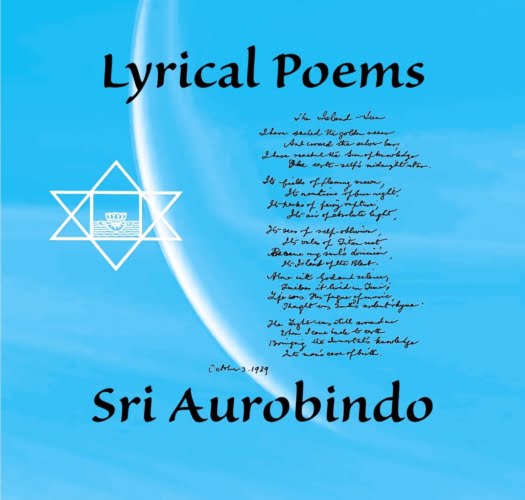
Sri Aurobindo once wrote that he wanted his short poems published in two separate books, one of sonnets and one of “(mainly) lyrical poems”.
This book contains all of Sri Aurobindo’s short poems, other than sonnets, composed between 1930 and 1950, with the exception of poems written solely as metrical experiments, nonsense poems written as parodies of surrealist verse, and incomplete or fragmentary poems. Most of the poems included are “lyrical” in the technical sense: they are short and express the writer’s personal thoughts and feelings. Unlike most other examples of the genre, however, their lyricism is spiritual and psychic. Along with the later sonnets and the epic Savitri, they represent Sri Aurobindo’s highest achievement in spiritual or yogic poetry.
Twenty-eight of the forty-two poems in this book were published by Sri Aurobindo during his lifetime in the following volumes: Six Poems (1934), Poems (1941), On Quantitative Metre (1942), and Poems Past and Present (1946). The other fourteen poems are taken from his manuscripts from the same period. Most of them were revised more than once, but some exist only in a single handwritten draft.
https://auro-ebooks.com/wp-content/uploads/2020/06/Sri-Aurobindo-Lyrical-Poems_001.jpg12391300Auro e-Bookshttp://auro-ebooks.com/wp-content/uploads/2023/06/auro-ebooks-logo.pngAuro e-Books2020-06-03 01:46:242026-08-26 03:53:54Lyrical Poems of Sri Aurobindo
These passages extracted from Sri Aurobindo’s works are intended to serve as significant pointers to the inestimable value of his views for a true understanding of the important issues in the life and thought of the individual and the society. It is hoped that they will awaken the interest of the intelligent reader and will induce him to seek fuller illumination by drawing him to the original works themselves which contain immeasurably more than these few extracts can offer.
https://auro-ebooks.com/wp-content/uploads/2020/05/Kishor-Gandhi-Thoughts-from-Sri-Aurobindo_001_sq350.png350350Auro e-Bookshttp://auro-ebooks.com/wp-content/uploads/2023/06/auro-ebooks-logo.pngAuro e-Books2020-05-24 01:46:222026-08-26 03:53:54Thoughts from Sri Aurobindo (Compiled by Kishor Gandhi)
Companion to Hymns to the Mystic Fire is meant as an aid to the systematic study of Hymns to the Mystic Fire (Volume 16 – The Complete Works of Sri Aurobindo – CWSA -, Sri Aurobindo Ashram Publication Department, Pondicherry, 2013) for those interested in Sri Aurobindo’s mystical interpretation of the Veda.
It provides the original Sanskrit verses (Riks) from the Rig Veda in Devanagari (without accents), translated and cited by Sri Aurobindo in Hymns to the Mystic Fire. The compiler has provided the Padpātha (in Devanagari as well as Roman Transcription) under each verse in which all euphonic combinations (sandhi) are resolved into the original and separate words and even the components of compound words (samās) indicated; and matched each Sanskrit word in the Padpātha with the corresponding English word in the Translation using superscripts. Footnotes, Explanatory Notes, and Synopsis of every Hymn based on Sri Aurobindo’s writings are given wherever available. The Appendix lists all the ‘Epithets’ of Agni from the Volume.
In the Foreword to the first edition of Hymns to the Mystic Fire, (1946) Sri Aurobindo stated that “.…to establish on a scholastic basis the conclusions of the hypothesis (mystical interpretation) it would have been necessary to prepare an edition of the Rig-veda or of a large part of it with a word by word construing in Sanskrit and English, notes explanatory of important points in the text…..” This compilation series is a humble attempt in providing such ‘word by word construing in Sanskrit and English’ of selected verses of the Rig Veda with ‘explanatory notes’.
Sri Aurobindo has said that – Throughout the Veda it is in the hymns which celebrate this strong and brilliant deity [Agni] that we find those which are the most splendid in poetic colouring, profound in psychological suggestion and sublime in their mystic intoxication (The Secret of the Veda, Vol.15 p.390). Hope the following pages provide a glimpse of the splendid, the profound and the sublime in these mystic hymns to this brilliant deity.
Book Details
Author: Mukund Ainapure
Print Length: 164
Publisher: Mukund Ainapure
Original source:
Submitted by: Mukund Ainapure
Book format: Pdf
Language: English Read more
https://auro-ebooks.com/wp-content/uploads/2020/05/Companion-to-Hymns-to-the-Mystic-Fire-vol3_sq250.png250250Auro e-Bookshttp://auro-ebooks.com/wp-content/uploads/2023/06/auro-ebooks-logo.pngAuro e-Books2020-05-24 00:55:242024-08-17 03:04:03Companion to “Hymns to the Mystic Fire” (Vol.3) by Mukund Ainapure
Companion to ‘Hymns to the Mystic Fire’ is meant as an aid to the systematic study of Hymns to the Mystic Fire (Volume 16 – The Complete Works of Sri Aurobindo – CWSA -, Sri Aurobindo Ashram Publication Department, Pondicherry, 2013) for those interested in Sri Aurobindo’s mystical interpretation of the Veda.
It provides the original Sanskrit verses (Riks) from the Rig Veda in Devanagari (without accents), translated and cited by Sri Aurobindo in Hymns to the Mystic Fire. The compiler has provided the Padpātha under each verse in which all euphonic combinations (sandhi) are resolved into the original and separate words and even the components of compound words (samās) indicated; and matched each Sanskrit word in the Padpātha with the corresponding English word in the Translation using superscripts. Alternative translations [Alt.], explanatory notes [Expln.] and Footnotes [fn] based on Sri Aurobindo’s writings are given wherever available.
In the Foreword to the first edition of Hymns to the Mystic Fire, (1946) Sri Aurobindo stated that “.…to establish on a scholastic basis the conclusions of the hypothesis (mystical interpretation) it would have been necessary to prepare an edition of the Rig-veda or of a large part of it with a word by word construing in Sanskrit and English, notes explanatory of important points in the text…..” This compilation series is a humble attempt in providing such ‘word by word construing in Sanskrit and English’ of selected verses of the Rig Veda ‘with explanatory notes’.
Sri Aurobindo has said that – Throughout the Veda it is in the hymns which celebrate this strong and brilliant deity (Agni) that we find those which are the most splendid in poetic colouring, profound in psychological suggestion and sublime in their mystic intoxication (The Secret of the Veda, Vol.15 p.390). Hope the following pages provide a glimpse of the splendid, the profound and the sublime in these mystic hymns to this brilliant deity.
Book Details
Author: Mukund Ainapure
Print Length: 227
Publisher: Mukund Ainapure
Original source:
Submitted by: Mukund Ainapure
Book format: Pdf
Language: English Read more
https://auro-ebooks.com/wp-content/uploads/2020/02/Companion-to-Hymns-to-the-Mystic-Fire-vol2-cover250sq.png250250Website Visitorhttp://auro-ebooks.com/wp-content/uploads/2023/06/auro-ebooks-logo.pngWebsite Visitor2020-02-28 02:41:352024-08-17 03:03:31Companion to “Hymns to the Mystic Fire” (Vol.2) by Mukund Ainapure
This volume contains the conversations of the Mother in 1957 and 1958 with the members of her Wednesday evening French class, held at the Ashram Playground. The class was composed of sadhaks of the Ashram and students of the Ashram’s school. The Mother usually began by reading out a passage from a French translation of one of Sri Aurobindo’s writings; she then commented on it or invited questions. For most of 1957 the Mother discussed the second part of Thoughts and Glimpses and the essays in The Supramental Manifestation upon Earth. From October 1957 to November 1958 she took up two of the final chapters of The Life Divine. These conversations comprise the last of the Mother’s “Wednesday classes”, which began in 1950.
The Mother’s French classes cover the eight-year period from 1950 to 1958. The Wednesday classes of 1950-51 and 1953-58 comprise the “Questions and Answers” talks. Between June 1951 and March 1953 these classes were replaced by “translation classes” in which the Mother translated into French several of Sri Aurobindo’s works, including The Ideal of Human Unity, The Human Cycle, part of The Synthesis of Yoga and the last six chapters of The Life Divine. During this period, she continued to speak informally with the students, but what she said was not tape-recorded.
This volume is made up of conversations of the Mother in 1956 with the members of her French class, held on Wednesday evenings at the Ashram Playground. The class was composed of sadhaks of the Ashram and students of the Ashram’s school. The Mother usually began by reading out a passage from a French translation of one of Sri Aurobindo’s writings; she then commented on it or invited questions. During this year she discussed portions of two works of Sri Aurobindo: The Synthesis of Yoga (Part One) and Thoughts and Glimpses (first part).
The Mother’s French classes cover the eight-year period from 1950 to 1958. The Wednesday classes of 1950-51 and 1953-58 comprise the “Questions and Answers” talks. Between June 1951 and March 1953 these classes were replaced by “translation classes” in which the Mother translated into French several of Sri Aurobindo’s works, including The Ideal of Human Unity, The Human Cycle, part of The Synthesis of Yoga and the last six chapters of The Life Divine. During this period, she continued to speak informally with the students, but what she said was not tape-recorded.
This volume is made up of talks given by the Mother in 1955 to the members of her French class. Held on Wednesday evenings at the Ashram Playground, the class was composed of sadhaks of the Ashram and students of its school. The Mother usually began by reading out a passage from one of her works or a French translation of one of Sri Aurobindo’s writings. She then commented on the passage or invited questions. For most of the year she discussed two small books by Sri Aurobindo, Bases of Yoga and Lights on Yoga, and two chapters of The Synthesis of Yoga. She spoke only in French.
The Mother’s French classes cover the eight-year period from 1950 to 1958. The Wednesday classes of 1950-51 and 1953-58 comprise the “Questions and Answers” talks. Between June 1951 and March 1953 these classes were replaced by “translation classes” in which the Mother translated into French several of Sri Aurobindo’s works, including The Ideal of Human Unity, The Human Cycle, part of The Synthesis of Yoga and the last six chapters of The Life Divine. During this period, she continued to speak informally with the students, but what she said was not tape-recorded.