
Letters on Savitri
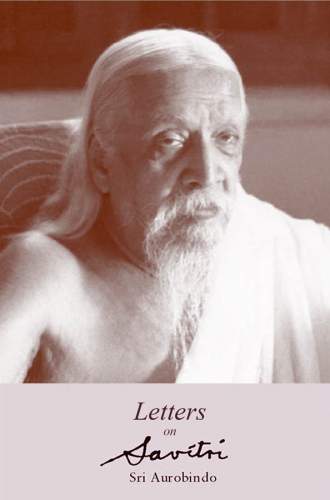
Letters on Savitri
Sri Aurobindo’s letters on Savitri. These letters are published at the end of Savitri for their rare value as a great poet’s informal self-commentary. These letters had been published in 1954 Savitri edition but were omitted in the later publications. Here we publish them as a separate book.
Book Details
Author: Sri Aurobindo
Print Length: 118 pages
Publisher: Sri Aurobindo Ashram
Contributors: Krishna
Language: English
Book Download
Contents:
- Introduction to Letters on Savitri
- Part I
- Part II
- Part III
- Part IV
- Part V
- Part VI
Sample
Introduction to Letters on Savitri
These letters are published at the end of Savitri for their rare value as a great poet’s informal self-commentary. Apropos that value, a few facts of deep personal interest may be mentioned about the coming of this poem to its close.
Some months before his passing, Sri Aurobindo, as if in foreknowledge of the event, said: “I want to finish Savitri soon.” The words took by utter surprise the disciple, his scribe, who has been used to the grandly patient way in which so far it had been composed and frequently retouched and amplified. Even when, in the past, composition had been extraordinarily swift – once four to five hundred lines needing hardly any change were dictated in succession – there had been no hurry in the poet’s attitude to his work. But now he increased immensely the general tempo of composition and revision. There seemed a race with time. And it was almost towards the end that, after rapidly revising the long second canto of the Book of Fate, he paused with some satisfaction. Then he inquired what still remained to be written. On being told about the Book of Death and Epilogue entitled The Return to Earth, which were yet to be caught up into a larger utterance, he remarked: “Oh, that? We shall see about that afterwards.” Savitri, as the footnote to the Book of Death indicates, was not completed in the common meaning of the term and indeed Sri Aurobindo’s original plan was to give this part of the poem as well as the Epilogue a thorough recasting. But his strange remark suggests that later, for reasons of his own, he was not anxious about them and that what he had thought necessary had been done. So it is impossible to say definitely that he did not wish Savitri to be, on the whole, just as he had left it after making corrections and additions in the Canto already mentioned of the Book of Fate.
These corrections and additions were the last things he wrote in this epic of twenty-three thousand [eight hundred and thirty seven (4th edition, 1993] lines, over which he spent so many years. Among them, in view of subsequent circumstances, three newly written passages in the speech of Narad stand out most significantly. The first is about the sacrifice the God-Man gives in history:
He who has found his identity with God
Pays with the body’s death his soul’s vast light.
His knowledge immortal triumphs by his death.
The second dwells on the inner meaning with which Satyavan’s departure from the earth is packed:
His death is a beginning of greater life…
A vast intention has brought two souls close
And love and death conspire towards one great end.
For out of danger and pain heaven-bliss shall come,
Time’s unforeseen event, God’s secret plan.
The third is the passage of seventy-two lines, absolutely the last piece of poetry dictated by Sri Aurobindo, in which, with a sound as of massive repeating bells, Narad admonishes King Aswapathy’s wife when she protests against the fate of loneliness that will be her daughter’s Savitri’s in consequence even as it appeared to be that of Sri Aurobindo’s spiritual co-worker, the Mother, at the time the Master of the “Integral Yoga” withdrew from his body. Some lines may be quoted:
As a star, uncompanioned, moves in heaven
Travelling infinity by its own light,
The great are strongest when they stand alone.
A God-given might of being is their force,
A ray from self’s solitude of light the guide;
The soul that can live alone with itself meets God;
Its lonely universe is their rendezvous.
A day may come when she must stand unhelped
On a dangerous brink of the world’s doom and hers,
Carrying the world’s future on her lonely breast,
Carrying the human hope in a heart left sole
To conquer or fail on a last desperate verge,
Alone with death and close to extinction’s edge.
Must cross alone a perilous bridge in Time
And reach an apex of world-destiny
Where all is won or all is lost for man.
In that tremendous silence lone and lost
Of a deciding hour in the world’s fate,
In her soul’s climbing beyond mortal time
When she stands sole with Death or sole with God
Apart upon a silent desperate brink,
Alone with her self and death and destiny
As on some verge between Time and Timelessness
When being must end or life rebuild its base,
Alone she must conquer or alone must fall.
No human aid can reach her in that hour,
No armoured god stand shining at her side.
Cry not to heaven, for she alone can save.
For this the silent Force came missioned down;
In her the conscious Will took human shape:
She only can save herself and save the world.
O queen, stand back from that stupendous scene,
Come not between her and her hour of Fate.
Her hour must come and none can intervene:
Think not to turn her from her heaven-sent task,
Strive not to save her from her own high will.
Thou hast no place in that tremendous strife;
Thy love and longing are not arbiters there;
Leave the world’s fate and her to God’s sole guard.
Even if he seems to leave her to her lone strength,
Even though all falters and falls and sees an end
And the heart fails and only are death and night,
God-given her strength can battle against doom
Even on a brink where Death alone seems close
And no human strength can hinder or can help.
Think not to intercede with the hidden Will,
Intrude not twixt her spirit and its force
But leave her to her mighty self and Fate.”