Auro e-Books
  • Library Catalog
    • All Free eBooks
    • Authors Directory
    • Book Genres
  • Sri Aurobindo & The Mother
    • Sri Aurobindo (CWSA)
    • The Mother (Mirra Alfassa)
    • Mrinalini Devi
    • Satprem
    • Mother’s Agenda
  • Wisdom & Mindfulness
    • Anthony de Mello (Awareness)
    • J. Krishnamurti
    • The Denial of Death (E. Becker)
  • Reading Guides
    • How to Read Savitri
    • The Life Divine Map
    • The Upanishads Guide
    • Anandamath: Story & History
  • About & Archive
    • The Auroville Project
    • Places & Centers
    • Contact Us
  • Donate
  • Click to open the search input field Click to open the search input field Search
  • Menu Menu
  • Shopping Cart Shopping Cart
    0Shopping Cart

Auro e-Books library: free ebooks on yoga, spirituality and Indian philosophy — works by Sri Aurobindo, the Mother and their disciples in PDF, ePub, Kindle.

Lotus Mountain by Rod Hemsell
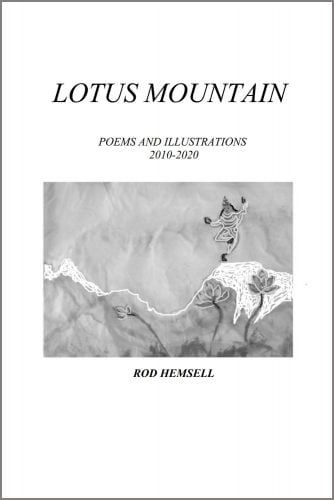
Lotus Mountain

While assembling this “next” collection of poems, written during the past ten years, it was gratifying to realize that there has been a development in both the forms and the meanings that are expressed in these poems. Some of the heights that were aspired to or glimpsed in the earlier poems and under other circumstances, have actually been grasped, experienced, perhaps even adequately transmitted through these later efforts. Of course it is still “me” and my experience, my language, my energies; and everything I experience is conditioned by my particular range of exposures, my limitations, my aspirations, my receptivity or lack, and so on. But, as I have said before, these poems are the product of an effort to allow nature and consciousness to come into resonance and to express the product of their interaction through an inspired flow of words, as far as it is possible. As we have been taught by the Master, the less we impose our personal mental predispositions on the process the better the product will be. This is a method that I have practiced for 50 years, and at least I can say that I have kept the faith, and this modest product is the outcome. It is also the product of the natural environments in which I have found myself and which have often inspired me; the qualities of nature seem to sometimes  reveal themselves to me in ways that stimulate a flow of words that captures and embodies her beauty and power, her wickedness and weakness, her infinity of creativity and meaning that I find irresistible. For that I am deeply grateful, and I consider it a blessing of the Mother of all forms and meanings who has enriched my life from time to time with a particle of her Infinite Grace.

Rod Hemsell
February, 2020


Book Details

Author: Rod Hemsell
Print Length: 104
Publisher: Auro e-Books
Contributor: Edith Stadig, Krishna
Book format: Pdf
Language: English
Read more
https://auro-ebooks.com/wp-content/uploads/2020/06/Lotus-Mountain-Poems-2020-sq250.png 250 250 Auro e-Books http://auro-ebooks.com/wp-content/uploads/2023/06/auro-ebooks-logo.png Auro e-Books2020-07-05 07:28:112020-07-16 23:21:29Lotus Mountain by Rod Hemsell

Poems of Devotion and Stillness by Rod Hemsell

Poems of Devotion and Stillness

In reviving these earlier poems and images of mine, composed between the age of 25 and 65, I recognize an implicit belief in the ability of poetic speech and consciousness to convey in a vivid way our inner connection with “nature” – in and around us – and to express the ‘reality’ of both nature and our experience. At best it may also express other realities that transcend both nature and experience, such as the idea that stones have eyes and ears, and our lives are influenced by celestial beings. This belief in poetry implies as well that language and consciousness are more than mere ‘representations’ of reality: they are faculties that resonate with nature and experience in a way that reveals a deeper symbolic identity or close kinship between the two poles of reality. This may be a naive belief, no doubt, but it also has its roots in the much earlier Vedic notions about language and truth. Being inspired by Sri Aurobindo and the Mother, my hope is that something of the truth of those notions will be seen, heard, and felt by the reader. It is this same consciousness applied to contemporary environmental issues that has also informed the fantasy-essay on climate change, Cloning the Earth, written ten years ago but more relevant than ever and likely to be better understood, today.

And yet, while these may be universal truths of ‘poetry’ and ‘consciousness’, or at least reasonable theories, I also realize that these poems are the record of unique moments of my life and my experience. As such, they are a very personal effort to express what I have seen, felt, and understood to be their true nature and quality (swabhava). It may be said that the unstated theme is the unification of self and nature through symbolic speech. The drive to write in this way has made both self and nature more real.

Rod Hemsell
February, 2020


Book Details

Author: Rod Hemsell
Print Length: 109
Publisher: Auro e-Books
Contributor: Edith Stadig, Krishna
Book format: Pdf
Language: English
Read more
https://auro-ebooks.com/wp-content/uploads/2020/07/Poems-of-Devotion-and-Stillness-cover250sq.png 250 250 Auro e-Books http://auro-ebooks.com/wp-content/uploads/2023/06/auro-ebooks-logo.png Auro e-Books2020-07-05 07:27:152020-07-05 10:38:41Poems of Devotion and Stillness by Rod Hemsell

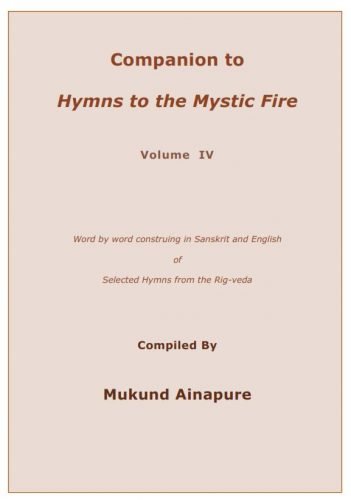
Companion to “Hymns to the Mystic Fire” (Vol.4) by Mukund Ainapure

Companion to Hymns to the Mystic Fire

Volume IV

Companion to Hymns to the Mystic Fire is meant as an aid to the systematic study of Hymns to the Mystic Fire (Volume 16 – The Complete Works of Sri Aurobindo – CWSA -, Sri Aurobindo Ashram Publication Department, Pondicherry, 2013) for those interested in Sri Aurobindo’s mystical interpretation of the Veda.

It provides the original Sanskrit verses (Riks) from the Rig Veda in Devanagari (without accents), translated and cited by Sri Aurobindo in Hymns to the Mystic Fire. The compiler has provided the Padpātha (in Devanagari as well as Roman Transcription) under each verse in which all euphonic combinations (sandhi) are resolved into the original and separate words and even the components of compound words (samās) indicated; and matched each Sanskrit word in the Padpātha with the corresponding English word in the Translation using superscripts. Footnotes, Explanatory Notes, and Synopsis of every Hymn based on Sri Aurobindo’s writings are given wherever available. The Appendix lists all the ‘Epithets’ of Agni from the Volume.

In the Foreword to the first edition of Hymns to the Mystic Fire, (1946) Sri Aurobindo stated that “.…to establish on a scholastic basis the conclusions of the hypothesis (mystical interpretation) it would have been necessary to prepare an edition of the Rig-veda or of a large part of it with a word by word construing in Sanskrit and English, notes explanatory of important points in the text…..” This compilation series is a humble attempt in providing such ‘word by word construing in Sanskrit and English’ of selected verses of the Rig Veda with ‘explanatory notes’.

Sri Aurobindo has said that – Throughout the Veda it is in the hymns which celebrate this strong and brilliant deity [Agni] that we find those which are the most splendid in poetic colouring, profound in psychological suggestion and sublime in their mystic intoxication (The Secret of the Veda, Vol.15 p.390). Hope the following pages provide a glimpse of the splendid, the profound and the sublime in these mystic hymns to this brilliant deity.


Book Details

Author: Mukund Ainapure
Print Length: 248
Publisher: Mukund Ainapure
Original source:
Submitted by: Mukund Ainapure
Book format: Pdf
Language: English
Read more
https://auro-ebooks.com/wp-content/uploads/2020/06/Companion-to-Hymns-to-the-Mystic-Fire-vol4-cover250sq.png 250 250 Auro e-Books http://auro-ebooks.com/wp-content/uploads/2023/06/auro-ebooks-logo.png Auro e-Books2020-06-24 02:10:382024-08-17 03:04:17Companion to “Hymns to the Mystic Fire” (Vol.4) by Mukund Ainapure

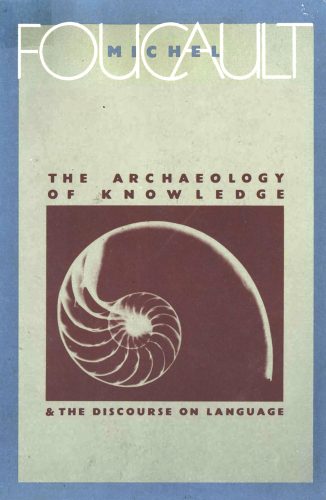
The Archaeology of Knowledge and The Discourse on Language by Michel Foucault

The Archaeology of Knowledge

and The Discourse on Language

Madness, sexuality, power, knowledge — are these facts of life or simply parts of speech? In a series of works of astonishing brilliance, historian Michel Foucault has excavated the hidden assumptions that govern the way we live and the way we think. The Archaeology of Knowledge begins at the of “things said” and moves quickly to illuminate the connections between knowledge, language, and action in a style at once profound and personal. A summing up of Foucault’s own methodological assumptions, this book is also a first step toward a genealogy of the way we live now. Challenging, at times infuriating, it is an absolutely indispensable guide to one of the most innovative thinkers now writing.


Book Details

Author: Michel Foucault
Print Length: 240
Publisher: Pantheon Books
Submitted by: Robert
Book format: Pdf
Language: English
Read more
https://auro-ebooks.com/wp-content/uploads/2020/06/Michel-Foucault-Archaeology-of-Knowledge_sq250.png 250 250 Auro e-Books http://auro-ebooks.com/wp-content/uploads/2023/06/auro-ebooks-logo.png Auro e-Books2020-06-21 02:04:142020-06-21 02:08:24The Archaeology of Knowledge and The Discourse on Language by Michel Foucault

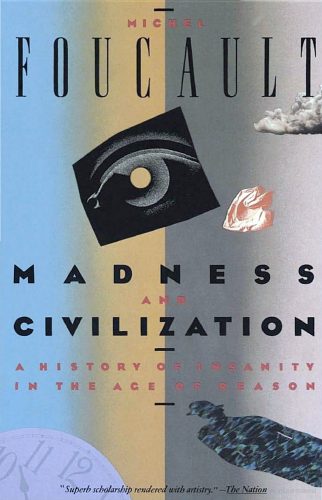
Madness and Civilization: A History of Insanity in the Age of Reason by Michel Foucault

Madness and Civilization

A History of Insanity in the Age of Reason

Michel Foucault examines the archeology of madness in the West from 1500 to 1800 – from the late Middle Ages, when insanity was still considered part of everyday life and fools and lunatics walked the streets freely, to the time when such people began to be considered a threat, asylums were first built, and walls were erected between the “insane” and the rest of humanity.

Foucault traces the evolution of the concept of madness through three phases: the Renaissance, the “Classical Age” (the later seventeenth and most of the eighteenth centuries) and the modern experience. He argues that in the Renaissance the mad were portrayed in art as possessing a kind of wisdom – a knowledge of the limits of our world – and portrayed in literature as revealing the distinction between what men are and what they pretend to be. Renaissance art and literature depicted the mad as engaged with the reasonable while representing the mysterious forces of cosmic tragedy but the Renaissance also marked the beginning of an objective description of reason and unreason (as though seen from above) compared with the more intimate medieval descriptions from within society.


Book Details

Author: Michel Foucault
Print Length: 311
Publisher: Random House
Submitted by: Robert
Book format: Pdf
Language: English
Read more
https://auro-ebooks.com/wp-content/uploads/2020/06/Michel-Foucault-A-History-of-Insanity-in-the-Age-of-Reason_sq250.png 250 250 Auro e-Books http://auro-ebooks.com/wp-content/uploads/2023/06/auro-ebooks-logo.png Auro e-Books2020-06-21 01:45:002020-06-21 01:47:15Madness and Civilization: A History of Insanity in the Age of Reason by Michel Foucault

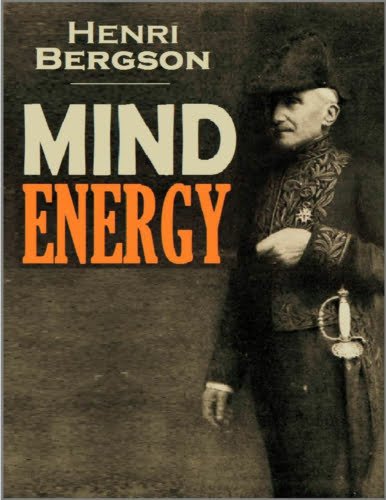
Mind-energy: Lectures and Essays (1920) by Henri Bergson

Mind-Energy
Lectures and Essays

In these essays, Bergson writes, concerning the idea of parallelism between mind and body:

“Consciousness tells no more than what is going on in the brain, it only tells it in a different language.”  There can be no doubt that the origin of this thesis is entirely metaphysical. It comes to us in a direct line from the Cartesian philosophy of the seventeenth century. …I believe that the facts, examined without prejudice and without the bias towards a mathematical mechanism, suggest a more subtle hypothesis concerning the correspondence between the psychic (ie., mental) and the cerebral state. The latter only express the action which is prefigured in the former. …for to the same cerebral state there may equally well correspond many different psychic facts” (p. 144).

In his characteristically clear and precise manner Bergson pursues in these essays the elusive problem of the mind-body relationship which is once again at the forefront of both the science and the philosophy of consciousness today. The solution that he suggests is that these are two different approaches to the understanding of reality, each describing an aspect of that reality – one material and the other spiritual. Science tries to grasp the reality by means of physical observation and measurement; the philosophical approach tries to grasp reality by means of intuition and ideation. To fail to make the distinction necessarily leads to contradiction and error.

Bergson published these essays in 1919, more than 20 years after Matter and Memory (1896) and Creative Evolution (1907), at a time when his reputation as the leading philosopher of the day had spread throughout both the physical and the spiritual world. He was president of the Academie des science (France) and the Society for Psychical Research (UK), representing the two approaches to knowledge. And he had lectured at Oxford (UK) and Columbia (USA) universities. He was fluent in English and had decided as a young university student to become a citizen of France rather than of England.

The fact that Bergson’s work is currently enjoying a revival in both science and philosophy, due to the widespread interest in the study of  “consciousness”, along with the concurrence and convergence of his philosophy with that of Sri Aurobindo, suggests that these essays may be important to the understanding of both of these philosophers of Intuition and Consciousness, as well as to better understanding the relevance of their thought in the world today.

Read more

https://auro-ebooks.com/wp-content/uploads/2020/06/Henri-Bergson-Mind-Energy_001_sq350.png 350 350 Auro e-Books http://auro-ebooks.com/wp-content/uploads/2023/06/auro-ebooks-logo.png Auro e-Books2020-06-06 03:21:432026-08-26 03:53:54Mind-energy: Lectures and Essays (1920) by Henri Bergson

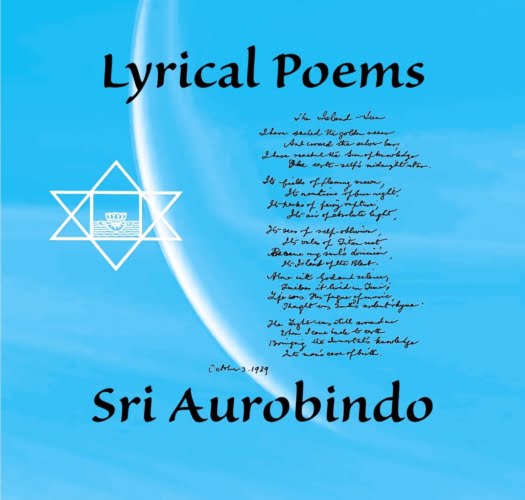
Lyrical Poems of Sri Aurobindo

Lyrical Poems of Sri Aurobindo

Sri Aurobindo once wrote that he wanted his short poems published in two separate books, one of sonnets and one of “(mainly) lyrical poems”.

This book contains all of Sri Aurobindo’s short poems, other than sonnets, composed between 1930 and 1950, with the exception of poems written solely as metrical experiments, nonsense poems written as parodies of surrealist verse, and incomplete or fragmentary poems. Most of the poems included are “lyrical” in the technical sense: they are short and express the writer’s personal thoughts and feelings. Unlike most other examples of the genre, however, their lyricism is spiritual and psychic. Along with the later sonnets and the epic Savitri, they represent Sri Aurobindo’s highest achievement in spiritual or yogic poetry.

Twenty-eight of the forty-two poems in this book were published by Sri Aurobindo during his lifetime in the following volumes: Six Poems (1934), Poems (1941), On Quantitative Metre (1942), and Poems Past and Present (1946). The other fourteen poems are taken from his manuscripts from the same period. Most of them were revised more than once, but some exist only in a single handwritten draft.


Book Details

Author: Sri Aurobindo

Print Length: 83 pages

Publisher: Sri Aurobindo Ashram

Book format: PDF, ePub, Kindle

Language: English Read more

https://auro-ebooks.com/wp-content/uploads/2020/06/Sri-Aurobindo-Lyrical-Poems_001.jpg 1239 1300 Auro e-Books http://auro-ebooks.com/wp-content/uploads/2023/06/auro-ebooks-logo.png Auro e-Books2020-06-03 01:46:242026-08-26 03:53:54Lyrical Poems of Sri Aurobindo

Thoughts from Sri Aurobindo (Compiled by Kishor Gandhi)

Thoughts from Sri Aurobindo

These passages extracted from Sri Aurobindo’s works are intended to serve as significant pointers to the inestimable value of his views for a true understanding of the important issues in the life and thought of the individual and the society. It is hoped that they will awaken the interest of the intelligent reader and will induce him to seek fuller illumination by drawing him to the original works themselves which contain immeasurably more than these few extracts can offer.


Book Details

Author: Sri Aurobindo

Print Length: 47 pages

Publisher: Sri Aurobindo Ashram

Book format: PDF, ePub, Kindle

Language: English Read more

https://auro-ebooks.com/wp-content/uploads/2020/05/Kishor-Gandhi-Thoughts-from-Sri-Aurobindo_001_sq350.png 350 350 Auro e-Books http://auro-ebooks.com/wp-content/uploads/2023/06/auro-ebooks-logo.png Auro e-Books2020-05-24 01:46:222026-08-26 03:53:54Thoughts from Sri Aurobindo (Compiled by Kishor Gandhi)

Companion to “Hymns to the Mystic Fire” (Vol.3) by Mukund Ainapure

Companion to Hymns to the Mystic Fire

Volume III

Companion to Hymns to the Mystic Fire is meant as an aid to the systematic study of Hymns to the Mystic Fire (Volume 16 – The Complete Works of Sri Aurobindo – CWSA -, Sri Aurobindo Ashram Publication Department, Pondicherry, 2013) for those interested in Sri Aurobindo’s mystical interpretation of the Veda.

It provides the original Sanskrit verses (Riks) from the Rig Veda in Devanagari (without accents), translated and cited by Sri Aurobindo in Hymns to the Mystic Fire. The compiler has provided the Padpātha (in Devanagari as well as Roman Transcription) under each verse in which all euphonic combinations (sandhi) are resolved into the original and separate words and even the components of compound words (samās) indicated; and matched each Sanskrit word in the Padpātha with the corresponding English word in the Translation using superscripts. Footnotes, Explanatory Notes, and Synopsis of every Hymn based on Sri Aurobindo’s writings are given wherever available. The Appendix lists all the ‘Epithets’ of Agni from the Volume.

In the Foreword to the first edition of Hymns to the Mystic Fire, (1946) Sri Aurobindo stated that “.…to establish on a scholastic basis the conclusions of the hypothesis (mystical interpretation) it would have been necessary to prepare an edition of the Rig-veda or of a large part of it with a word by word construing in Sanskrit and English, notes explanatory of important points in the text…..” This compilation series is a humble attempt in providing such ‘word by word construing in Sanskrit and English’ of selected verses of the Rig Veda with ‘explanatory notes’.

Sri Aurobindo has said that – Throughout the Veda it is in the hymns which celebrate this strong and brilliant deity [Agni] that we find those which are the most splendid in poetic colouring, profound in psychological suggestion and sublime in their mystic intoxication (The Secret of the Veda, Vol.15 p.390). Hope the following pages provide a glimpse of the splendid, the profound and the sublime in these mystic hymns to this brilliant deity.


Book Details

Author: Mukund Ainapure
Print Length: 164
Publisher: Mukund Ainapure
Original source:
Submitted by: Mukund Ainapure
Book format: Pdf
Language: English
Read more
https://auro-ebooks.com/wp-content/uploads/2020/05/Companion-to-Hymns-to-the-Mystic-Fire-vol3_sq250.png 250 250 Auro e-Books http://auro-ebooks.com/wp-content/uploads/2023/06/auro-ebooks-logo.png Auro e-Books2020-05-24 00:55:242024-08-17 03:04:03Companion to “Hymns to the Mystic Fire” (Vol.3) by Mukund Ainapure

The English of Savitri Volume 6

The English of Savitri
volume 6

This is the sixth volume of the English of Savitri series, based on transcripts of classes led by the author at Savitri Bhavan, in this case from 23 June to 29 December 2016. The transcripts have been carefully revised and edited for conciseness and clarity, while aiming to preserve the informal atmosphere of the course. This volume contains detailed explanations of the texts of the two closing Books of Sri Aurobindo’s epic: Book Eleven – The Book of Everlasting Day and Book Twelve – Epilogue: The Return to Earth. Each sentence is examined closely and explanations are given about vocabulary, sentence structure and imagery. The aim is to assist a deeper understanding and appreciation of the poem which the Mother has characterised as ‘the supreme revelation of Sri Au robin do’s vision’.

(more…)

https://auro-ebooks.com/wp-content/uploads/2020/04/shraddhavan-the-english-of-savitri-6_cover250sq.png 350 350 Auro e-Books http://auro-ebooks.com/wp-content/uploads/2023/06/auro-ebooks-logo.png Auro e-Books2020-04-24 01:59:072026-08-27 16:20:12The English of Savitri Volume 6
Page 9 of 25«‹7891011›»

Search

Search Search

Newsletter

Support to Auro e-Boooks

Support Auro e-Books with your donation

Follow us on Facebook

  • Human Consciousness and Truth: Heidegger and Sri Aurobindo
    Human Consciousness and Truth: Heidegger and Sri AurobindoOctober 27, 2026 - 11:34 am
  • An Early Chapter in the Mother’s LifeSeptember 5, 2026 - 6:02 am
  • JapaSeptember 5, 2026 - 6:00 am
  • Our Many Selves: Practical Yogic PsychologySeptember 5, 2026 - 5:59 am
  • Living Words: Soul-Kindlers for the New MillenniumSeptember 5, 2026 - 5:58 am
  • Readings in Sri Aurobindo’s Rebirth and KarmaSeptember 5, 2026 - 5:56 am
Auro e-Books: Books on Yoga and Spirituality
Scroll to top Scroll to top Scroll to top

Expand Your Digital Spiritual Library

Join our newsletter for instant notifications about new titles in EPUB, MOBI, and PDF formats — always free to download and read on any device.

No spam. Only timeless wisdom delivered to your inbox.

Please enter a valid email address.

Thank you! Please check your inbox to confirm your subscription.