Conversations about Yoga and life. The Mother answered questions raised by disciples in 1929 and 1930–1931. The volume also includes her commentaries on The Dhammapada, with a translation of that text.
This volume includes two early collections of conversations by the Mother and her oral commentaries on the Dhammapada. The conversations were spoken in English; the commentaries were spoken in French and appear here in English translation.
Questions and Answers 1929. In 1929 the Mother met weekly with a small group of disciples. After a period of meditation she answered questions raised by them. Most of these questions were asked by an Englishwoman who was living in the Ashram at that time. One of those present noted down the conversations immediately afterwards and later sent a copy of fifteen of them to Sri Aurobindo, who revised them for publication. They were first brought out for private circulation in 1931.
Questions and Answers 1930-1931. During 1930 and 1931 the Mother spoke with a group of disciples who met with her in a room of the Ashram known as Prosperity. One of the participants recorded some of these conversations in abbreviated long-hand and later elaborated his notes. These reports were not revised by Sri Aurobindo or the Mother, but the Mother did approve of their publication and made a French translation. They were first published as a book in 1951.
Commentaries on theDhammapada. The Mother gave these commentaries on the Buddhist teachings of the Dhammapada between August 1957 and September 1958. She was speaking to a large gathering of Ashram members and students of the Ashram school, members of her “Friday class” at the Ashram Playground. After reading out a chapter of the text, the Mother spoke about the points that interested her and then asked the class to meditate on them. She did not comment systematically on the Dhammapada verses, but she did cover most of the central ideas of the text.
Appendix toQuestions and Answers 1929. This appendix contains Sri Aurobindo’s explanations of certain phrases and passages in Questions and Answers 1929. They were written to various disciples between 1933 and 1937.
Writings and talks from 1893 to 1920. The volume includes early essays, talks to seekers in Paris, essays written in Japan, and Tales of All Times, some stories for children. This volume contains all the writings of the Mother from the period before 1920, the year she settled in Pondicherry, with the exception of Prayers and Meditations. The book is divided into seven parts, according to the nature and date of the material. Most of the pieces were written originally in French and appear here in English translation.
Part 1. The essays and stories in this part were written by the Mother between 1893 and 1912. All the texts were written in French. All but two were first published in 1946 in the first part of a book entitled Paroles d’ autrefois. This book was reprinted in 1955. An English translation, entitled Words of Long Ago, was published in 1946 and reprinted in 1952 and 1947. In the 1978 edition of Words of Long Ago, the contents of Part 1 of the previous editions were rearranged according to date and two new pieces added: “A Sapphire Tale” and an unpublished note related to “On Thought”. “A Sapphire Tale” was first published in the original French and in English translation in the monthly journal Mother India in February 1957. At the time of its publication the Mother remarked to the journal’s editor that the story expressed “the ideal of the overmind creation”. The original translations of all the contents of Part 1 were revised for publication in 1978 in Words of Long Ago, Volume 2 of the Collected Works of the Mother. The same contents were brought out in the original French in 1983 in Paroles d’autrefois, the French counterpart of Volume 2 of the Collected Works.
Part 2. The essays in this part were written by the Mother for the meetings of “a small group of seekers” in 1912. All the texts were written in French. All but one were published in 1946 in the second part of Paroles d’autrefois. This book was reprinted in 1955. An English translation, entitled Words of Long Ago, was brought out in 1946 and reprinted in 1952 and 1974. In the 1978 edition of Words of Long Ago, one new piece was added: the essay for the meeting of 7 May 1914. This essay, which was restored to its original position in the series, was first published in 1939 in Quelques paroles, quelques prièrs and in English translation as the Foreword to the 1940 edition of Words of the Mother. The question at the beginning of this essay, taken from the Mother’s handwritten manuscript, was published for the first time in the 1978 edition of Words of Long Ago. The original translations of all the contents of Part 2 were revised for publication in that edition. The same contents were brought out in the original French in 1983 in Paroles d’autrefois.
Part 3. Between 1911 and 1913 the Mother gave a number of talks to different groups in Paris. Two of these talks, “On Thought” and “On Dreams”, appear in Part 1 of this book. Several other talks never published in the Mother’s lifetime are published here as Part 3. The Mother sometimes presented the same talk to different groups, with suitable additions and alteration. These variants, if significant and non-repetitive, have been given here in footnotes. A note relating to the Mother’s talks, which was found among her manuscripts, has been placed before the other items. The talks, notes and reflections in this part, all from the period 1912-13, were first published in English translation in 1978 as Part 3 of Words of Long Ago. The original French texts were first brought out in 1983 as Part 3 of Paroles d’autrefois.
Part 4. The writings in this part, similar to Prayers and Meditations, were not published in the Mother’s lifetime. Several of the pieces are dated between 1914 and 1916; the remainder seem clearly to belong to the period before 1920. These writings first appeared in English translation in 1978 as Part 4 of Words of Long Ago. The original French texts were first brought out in 1983 as Part 4 of Paroles d’autrefois.
Part 5. This part comprises several short essays and notes entitled by the Mother “Notes and Reflections”, and a few related writings. Several of the pieces are dated between 1914 and 1915; the rest appear to have been written around the same time. None of the writings were published during the Mother’s lifetime. They first appeared in English translation in 1978 as Part 5 of Words of Long Ago. The original French texts were first brought out in 1983 as Part 5 of Paroles d’autrefois.
Part 6. The letters, essays, etc. comprising this part were written in Japan between 1916 and 1920. “Woman and the War”, written originally in French, was published in an English translation seen and revised by the Mother, in the Fujoshimbun on 7 July 1916. “Woman and Man”, written in French around the same time and translated into English by the Mother, was never published in either language during her lifetime. “Reminiscences” also appears to have been written first in French and translated subsequently into English, very likely by the Mother herself. The other pieces in this part appear to have been written originally in English. They are among the Mother’s first compositions in the English language. “Impressions of Japan”, dated 9 July 1915, was written in Akakura and published in the form reproduced here in the Modern Review (Calcutta) in January 1918. “The Children of Japan”, an incomplete letter, was written shortly after “Impressions of Japan”, “Myself and My Creed” was written in February 1920. “To the Women of Japan” is undated. It exists in several versions, one of which has been chosen as the principal text; to this, passages from other versions have been added. Part of this talk was published as “To the Women of the World” in the annual Sri Aurobindo Circle of 1947. Some revisions, made by the Mother for this publication, have been included in the present text. A greater portion of the talk was published as “Talk to the Women of Japan” in 1967. The last part of “To the Women of Japan” incorporated passages from Sri Autobindo”s Human Cycle, Synthesis of Yoga, etc. The pieces in this part were published together in English in 1978 as Part 6 ofWords of Long Ago. The same pieces were brought out in French in 1983 as Part 6 ofParoles d’autrefois.
Part 7. The Mother translated and adapted some stories written by F.J. Gould which had been published in his Youth’s Noble Path in 1911. The Mother’s versions, written in French, were first published under the title Belles Histoires in 1946. English translations of the stories were first brought out in 1951 under the title Tales of All Times. These translations were revised for inclusion in Part 7 of the 1978 edition of Words of Long Ago. Several hitherto unpublished stories were translated and added as an appendix to that volume. All the stories were published in the original French in 1983 in Part 7 ofParoles d’autrefois and its appendix.
https://auro-ebooks.com/wp-content/uploads/2016/03/The-Mother-MCW-Vol2-cover.png350350Website Visitorhttp://auro-ebooks.com/wp-content/uploads/2023/06/auro-ebooks-logo.pngWebsite Visitor2016-03-21 14:23:552026-08-26 03:53:57Words of Long Ago (CWM Vol.2)
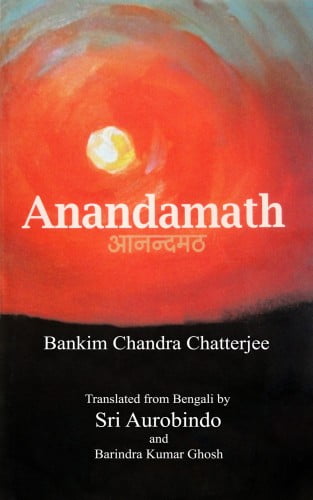
Anandamath is a Bengali novel, written by Bankim Chandra Chatterjee and published in 1882. Set in the background of the Sannyasi Rebellion in the late 18th century, it is considered one of the most important novels in the history of Bengali and Indian literature. Its importance is heightened by the fact that it became synonymous with the struggle for Indian independence from the British Empire. The novel was banned by the British. The ban was lifted later by the Government of India after independence. The national song of India, Vande Mataram, was first published in this novel.
The prologue and the first thirteen chapters of Part I were translated by Sri Aurobindo, the rest by his brother Barindra. The parts translated by Sri Aurobindo first appeared in the KARMAYOGIN, intermittently between August 7, 1909 and February 12, 1910.
Prayers and Meditations consists of extracts from the Mother’s spiritual diaries. Most of them are from the period 1912 to 1917. The 313 prayers reproduced here were selected by the Mother for publication. Written in French, they appear here in English translation.
A small collection of prayers — about one-fifth of the total — was brought out in English in 1941. Sri Aurobindo translated some of those prayers himself and, in the other cases, revised translations made by disciples.
This book comprises extracts from a diary written during years of intensive yogic discipline. It may serve as a spiritual guide to three principal categories of seekers: those who have undertaken self-mastery, those who want to find the road leading to the Divine, those who aspire to consecrate themselves more and more to the Divine Work. — The Mother
Like the previous book in the series, The English of Savitri Volume 2 is based on transcripts of classes led by the author at Savitri Bhavan, in this case from December 2012 to June 2013. The transcripts have been carefully revised and edited for conciseness and clarity, while aiming to preserve the informal atmosphere of the course. This second volume covers the four cantos of Book Three, The Book of the Divine Mother, of Sri Aurobindo’s epic, Savitri – a legend and a symbol. Each sentence in the poem is examined closely and explanations are given about vocabulary, sentence-structure and imagery. The aim is to assist a deeper understanding and appreciation of the poem which the Mother has characterised as ‘the supreme revelation of Sri Aurobindo’s vision’.
https://auro-ebooks.com/wp-content/uploads/2016/02/english-of-savitri-2-sq1000.png10001000Auro e-Bookshttp://auro-ebooks.com/wp-content/uploads/2023/06/auro-ebooks-logo.pngAuro e-Books2016-02-21 09:30:522026-08-09 13:01:07The English of Savitri Volume 2
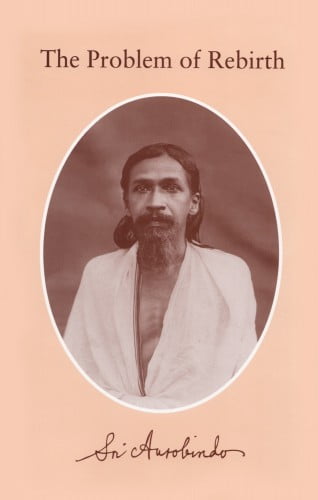
In The Problem of Rebirth, Sri Aurobindo assesses the central arguments surrounding the concept of rebirth. He suggests that rebirth is a vehicle conveying the soul forward in its aeonic evolution towards self-knowledge and self-mastery. Evolution through the process of rebirth enables the soul’s indomitable effort through Time; karma engineers its spiritual education. Once seen, the process of karma, the law of consequence, takes a central place among the issues of life: “This evolution is not possible if there is not a connected sequence from life to life, a result of action and experience, an evolutionary consequence to the soul, a law of Karma. ” We have all had occasion to question providence; to ask “why do the good suffer, why do the evil prosper”. Such fundamental questions of life take on a new significance when viewed with an understanding of The Problem of Rebirth.
The true foundation of the theory of rebirth is the evolution of the soul, or rather its efflorescence out of the veil of Matter and its gradual self-finding. Buddhism contained this truth involved in its theory of Karma and emergence out of Karma but failed to bring it to light; Hinduism knew it of old, but afterwards missed the right balance of its expression. Now we are again able to restate the ancient truth in a new language and this is already being done by certain schools of thought, though still the old incrustations tend to tack themselves on to the deeper wisdom. And if this gradual efflorescence be true, then the theory of rebirth is an intellectual necessity, a logically unavoidable corollary. But what is the aim of that evolution? Not conventional or interested virtue and the faultless counting out of the small coin of good in the hope of an apportioned material reward, but the continual growth towards a divine knowledge, strength, love and purity.
https://auro-ebooks.com/wp-content/uploads/2016/01/problem-of-rebirth250sq.png250250Auro e-Bookshttp://auro-ebooks.com/wp-content/uploads/2023/06/auro-ebooks-logo.pngAuro e-Books2016-01-24 10:13:342026-08-26 03:54:58The Problem of Rebirth
This book presents Sri Aurobindo’s vision of India as it grew from his return from England in 1893 to his political days in the first decade of the century and finally to his forty-year-long withdrawal from public view during which he plunged into his ‘real work’ of evolutionary action.
This brief chronological selection from all that Sri Aurobindo said or wrote on India, her soul and her destiny, is by no means integral, but we trust it offers a sufficiently wide view of the lines of development Sri Aurobindo wished India to follow if she was to overcome the deep-rooted obstacles standing in the way of her rebirth.
A few notes have been added to help put the excerpts into historical perspective, and a Chronology, list of References and Index have been provided at the end of the book. Read more
In the aphorisms that make up this book, Sri Aurobindo gives pithy and pregnant expression to some of the key ideas of his philosophy and yoga.
Thoughts and Aphorisms was written around 1913. Ten aphorisms from the manuscript were published in the monthly review Arya in 1915 and 1916 as parts of what was later issued as Thoughts and Glimpses. But the bulk of the aphorisms — that is, those included in the Karma, Jnana and Bhakti sections of the present booklet — were never published during Sri Aurobindo’s lifetime. They first appeared in book form in 1958.
The seven “Additional Aphorisms” were first included in the edition of 1977; the last five were written in a separate manuscript notebook, apparently somewhat later than the others.
This is the latest in an ongoing series of essays authored by Ray Morose in which he details the human condition and expounds upon how one can pierce the veils and uncover and live one’s true essence. His sometimes difficult intellectual approach is extremely metaphorical and, much like a koan, stretches the reader’s mind and opens it to new ways of conceptualizing the world in which it finds itself. He employs his own terminology, largely bereft of the labels so common in spirituality, and his language often jars like a wooden wheeled trip on cobblestone roods. In the process, he shakes out the dross and tightens mental structure.
Economics for People and Earth:
The Auroville Case 1968-2008
Auroville, an international township in South India, was founded in 1968. A small group of pioneers on a heavily eroded plateau, close to the Bay of Bengal near Pondicherry, set out to reforest the barren land and create a new socio-economic, ecological and spiritual habitat with a vision to build “a city the Earth needs”.
Forty years later, a vibrant community of almost 2,000 people from 43 nations had emerged, providing employment to some 4,000 men and women from nearby villages. Meanwhile, they had reforested thousands of acres of land, built homes, health centres and schools, developed organic farms, experimented with renewable energy and cost-effective building technologies, reached out to the neighbouring villages, and set up a plethora of businesses and services.
This book is a result of 15 years of research on Auroville’s economy. It outlines the principles envisaged by its founders, traces its history over the past four decades, investigates the growth of employment opportunities, offers a window on its economic activities through case interviews, and analyses the performance of its commercial and services domains.
It also gauges Auroville’s sustainability as a model of durable socio-economic development “for People and Earth”, and as an antidote for the all-pervading impact of global capitalism.
https://auro-ebooks.com/wp-content/uploads/2015/09/economics1-250sq1.png250250Auro e-Bookshttp://auro-ebooks.com/wp-content/uploads/2023/06/auro-ebooks-logo.pngAuro e-Books2015-09-29 09:46:002020-08-19 00:32:58Economics for People and Earth: The Auroville Case 1968-2008